
 Paloma

Table of contents
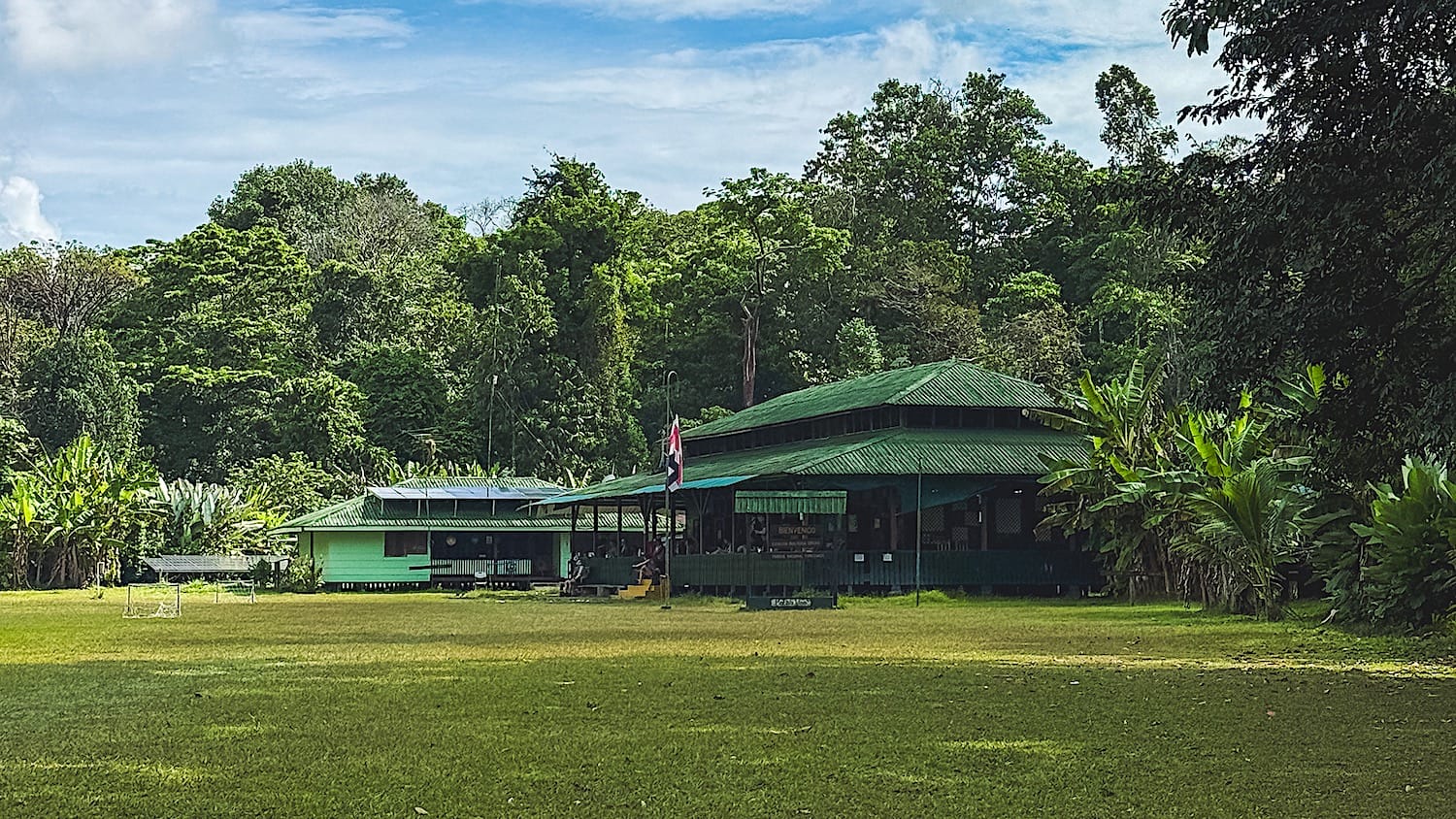
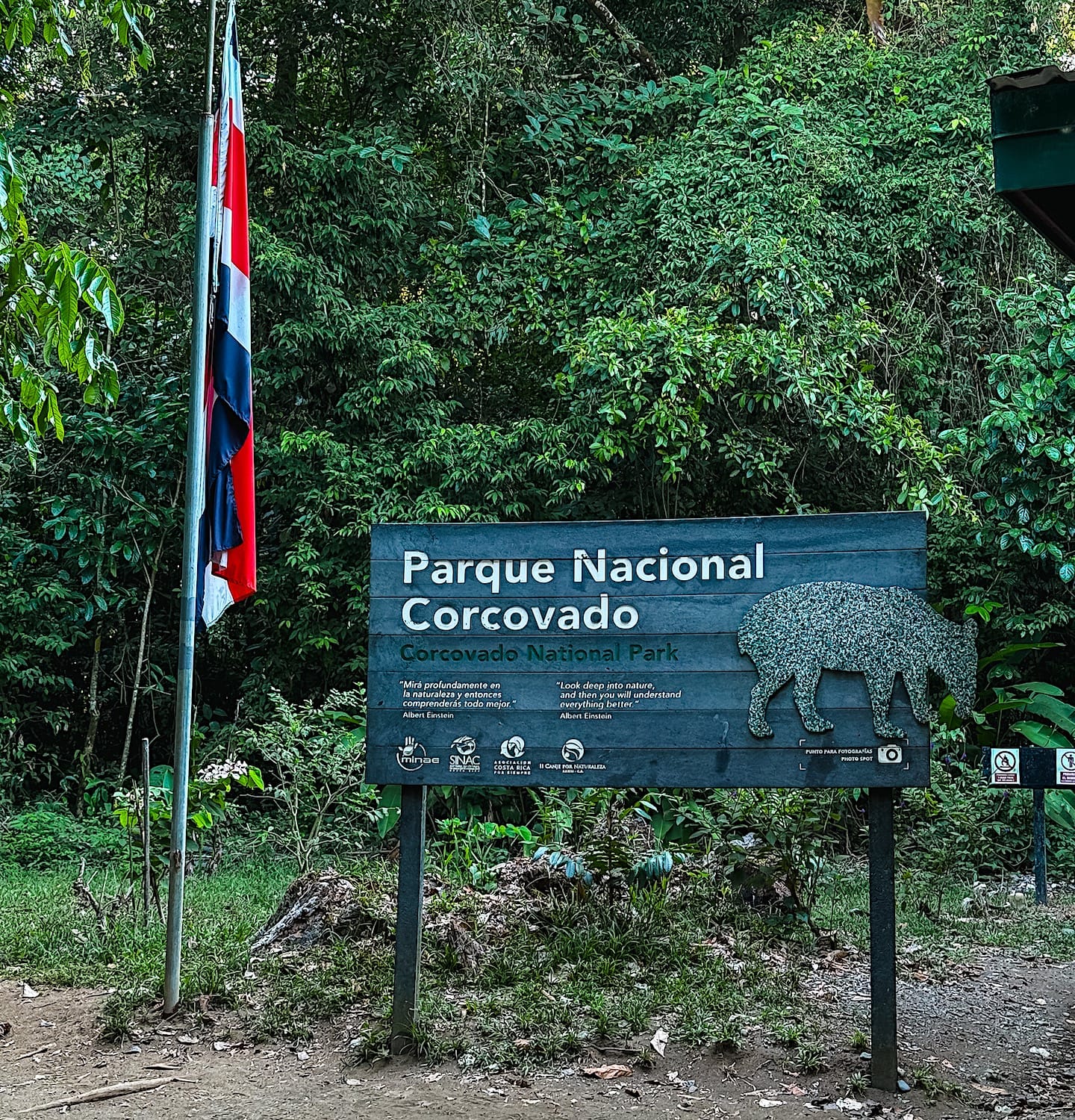
Corcovado National Park was the last stop on my 2-week road trip around Costa Rica, and the only place I left the car behind. No road leads to the Sirena Ranger Station, deep in the park on the Osa Peninsula. I reached it by boat from Sierpe, and I spent one night in a bunk bed surrounded by rainforest.
I’ll never forget the first tapir bathing in the mud just a few feet away from us, moving its unique ears. I thought that was the highlight of the trip, until we started seeing more of them and several calves.
This guide covers everything I’d want to know before going: how to get there, what the tours cost, where to stay, and what to expect once you’re inside.
Corcovado overview
Where is Corcovado National Park in Costa Rica
Corcovado National Park is located in the southwestern part of the country, near the border with Panama.
Corcovado National Park Map
Sirena VS San Pedrillo Ranger Station
The stations are in very different areas, which is why they offer very different experiences. San Pedrillo station is immersed in old forest, meaning the trees are bigger and the vegetation is denser. This means you are less likely to spot wildlife than at Sirena Station.
However, pumas like to hang around the San Pedrillo area, but when we were there, the female pumas living there had just had cubs, so they hadn't been seen for several weeks.
Visiting San Pedrillo doesn't guarantee you will spot a puma, and you might miss spotting the tapirs if you only visit there, and at the same time, some people have seen pumas in Sirena. That's why I recommend asking the tour operator whether they have this kind of information so that you can choose better.
In conclusion, visit Sirena Station if you want a better chance of spotting wildlife, and visit San Pedrillo for a better chance of spotting a puma. If you can, try visiting both stations.
Tour Options Corcovado National Park
If you visit during whale-watching season, you may spot whales or dolphins on your way to the national park on morning tours that start with a boat ride.
1. Day trip to Sirena Ranger Station
Departure points: Drake Bay or Puerto JimenezYou will start your day early, around 5:30 a.m., in either case. Then you'll ride a boat for about 1 hour to reach the coast near Sirena Ranger Station. After about 2 hours of sightseeing, you'll board the boat again, this time heading back to Drake Bay. The boat arrives in Drake Bay around 3 p.m.
2. Day trip to San Pedrillo Station
Departure points: Uvita or Drake BayThis is a popular option for those staying in Uvita who want a one-day trip to Corcovado. Hop on a boat early in the morning (around 7 a.m.) straight from Uvita to San Pedrillo Station. Explore the forest for about 4 to 5 hours, then take a boat back to Uvita.
Note that you can't do this tour from Puerto Jimenez.
3. Day-trip Hiking in La Leona Sector
Departure points: Puerto Jimenez
This is the only option on the list that doesn't start with a boat ride. Instead, you will hop on a 4x4 car at 6 a.m. for about 1h40. Then you will try to spot wildlife for 5 hours, have lunch in the jungle, and head back to Puerto Jimenez in the same 4x4.
La Leona Sector is less popular than the other sectors, and regulations are apparently less strict there, offering a great opportunity to spot wildlife.
4. Overnight to Sirena Ranger Station
Departure points: Drake Bay or Puerto Jimenez
For a more immersive experience, stay overnight at Sirena Ranger Station instead of just going there on a one-day tour.
Your day will start just like the one-day trip to Sirena Station, but instead of returning to Drake Bay in the afternoon, you will take a second walk through the national park. The following morning, the guide will lead you one last time through the jungle before taking the boat back to Drake Bay.
5. Overnight to Sirena AND San Pedrillo Ranger Station
Departure points: Drake Bay
A less common option, but some tour operators offer tours where you visit the Sirena ranger station during the day (as a day trip would), then go to the San Pedrillo section, where you sleep before returning to Drake Bay by boat or 4x4.
Tour Prices
Tour companies generally charge $110 USD to $200 USD per adult for day tours, and up to $ 260 USD per person for private tours. That price generally includes guiding services, a return boat ride, and lunch.
2-day, 1-night tours usually cost between $350 USD and $400 USD per person. The price includes the guide, the return boat ride, lunch for both days, 1 dinner, and the bunk bed.
How to get to Corcovado National Park
The national park has two main access points: Drake Bay and Puerto Jimenez. Drake Bay is the most popular.
Drake Bay vs Puerto Jimenez
Drake Bay sits directly on Costa Rica's Pacific coast. It is a small town where you won't find any ATMs, and services are more limited than in Puerto Jimenez. Drake Bay is also relatively harder to reach than Puerto Jimenez (see the details below).
But these are exactly the things we loved! When you stay in Drake Bay, you are surrounded by nature and have a higher chance of spotting wildlife. It feels raw and has a very laid-back vibe.
On the other hand, Puerto Jimenez is a real town, with plenty of services and ATMs, and it is easier to reach than Drake Bay. However, you won't feel immersed in nature if you stay in Puerto Jimenez. If you're short on time and this is your only option, do it anyway.
Getting to Drake Bay
By Car
Best for: those with a high-clearance 4x4 rental car who visit during the dry season.
It takes about 6 to 7 hours from San Jose, about 4 hours from Manuel Antonio (Quepos), and about 3 hours from Uvita to reach Drake Bay by car.
By Boat
Best for: those without a rental car.
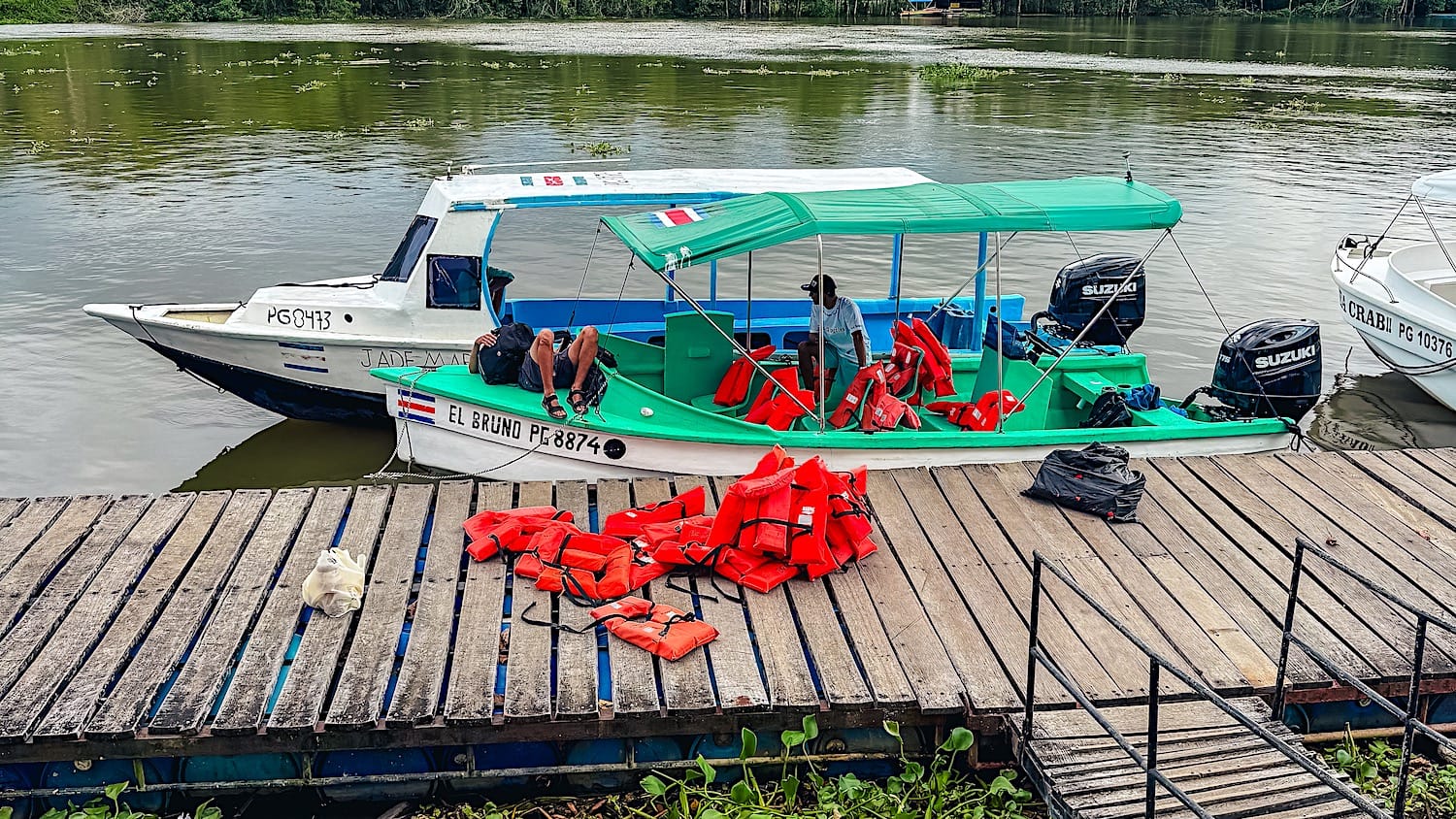
To reach Drake Bay by boat, you must first reach Sierpe, then take a boat that drops you directly at Drake Bay. Most hotels offer a complimentary pickup service that takes you straight from the beach to your hotel.
Flying
Best for: people who want to get straight to Corcovado from San Jose, without the long ride.
Contrary to popular belief, you can reach Drake Bay by flying. The local airline named "SANSA" runs daily flights between San Jose and Drake Bay. Prices range from $200 to $400 USD and include one carry-on bag.
Getting to Puerto Jimenez
By Car
Best for: those who already have a rental car but no 4x4, high-clearance vehicle.
It takes about 6 to 7 hours from San Jose, about 3 to 3.5 hours from Manuel Antonio (Quepos), and about 2.5 hours from Uvita to reach Drake Bay by car.
Flying
Best for: people who want to get straight to Corcovado from San Jose, without the long ride.
One pro of visiting via Puerto Jimenez is that you can fly straight from San Jose and avoid the long land route. The con, however, is that flights tend to be expensive, at about $300 USD return for a 55-minute flight; they can sell out quickly and operate usually only on weekends.
Where to stay to visit Corcovado National Park
Drake Bay
💰💰💰💰 Luxury: The Tranquilo Lodge, Adult Only – situated on the top of a hill, this luxury hotel guarantees you have a sea view from every room. You will be in the middle of lush green plants, and all meals are included.
💰💰 Comfort: Jacamar – this is where we stayed. This is a hotel that's in the city, so you won't be surrounded by the most amount of nature, but it is conveniently located, 5 to 10 minutes away from where tours to Corcovado and the boat to Sierpe depart . Additionally, many restaurants are nearby. None of the rooms have a sea view, but that was fine with us, as we were out most of the day. They do offer complimentary pick-up from the beach.
💰 Budget: Casa Jade – Great location, near where we stayed but with extra sea view and cheaper! We didn't book this place because it was sold out when we tried to. It is basic, but perfect if you just want a base to explore the National Park.
Puerto Jimenez
💰💰💰💰 Luxury: Lapa Rios Lodge – Featured in the 2025 Michelin Guide, this luxury hotel is 30 minutes away from Puerto Jimenez. That's how this lodge can be completely surrounded by jungle, plus a sea view. If you're looking for a high-end immersion in nature, this is it!
💰💰/💰💰💰 Comfort: Botanika Osa Peninsula, Curio Collection By Hilton – A conveniently located, modern hotel near the city center. This hotel has all the amenities you need for a pleasant stay, and nature is not missing from this location. However, prices vary widely, from affordable to not so much, depending on your dates and how far in advance you book.
Maze Lodge - Boutique Hotel – A more secluded option that puts you right on the edge of the national park, while being more budget-friendly than the luxury option. It's located 4.4 mi from Puerto Jiménez city center, in the middle of the jungle. The caveat is that prices vary greatly depending on your dates and how far out your stay is from the booking date.
Inside the National Park
Alternatively, you can sleep in one of the ranger stations inside the national park. To do so, you need to book a tour, as you cannot book a bed directly.
Be aware that ranger stations offer basic accommodations, and even if you have everything you need to sleep, clean up, and eat, it is nothing fancy.
Practical planning for Corcovado in Costa Rica
Best time to visit
The dry season, from mid-December to April, is the best time to visit Corcovado National Park. During this period, you can expect the most sunshine and calmer seas for boat transfers, and firm, mud-free trails. However, this is also peak tourist season, so expect higher crowds and prices.
Another good option, if you don't mind afternoon downpours and muddy trails, is the shoulder season in May, June, and November.
Note that if you choose to visit during the peak rainy season, between July and October, major park areas might be completely inaccessible and ranger stations closed due to heavy rain and flood risk.
When to book
Since Corcovado National Park limits daily visitors, tours can sell out during high season, especially overnight tours. The usual recommendation is to book your overnight tour at least a month in advance during high season. However, we booked it 2 weeks before going, and some of our tour peers said they were lucky to be still able to book just a couple of days in advance.
My recommendation is to book as early as you can to make sure you get in.
How many days to stay in Corcovado
I recommend staying at least 2 full days in Corcovado to visit the national park at ease. This will let you take a day trip to both ranger stations, or stay overnight at Sirena Ranger Station.
However, I absolutely loved the area, and you will see many animals there, even if Drake Bay isn't officially inside the national park. So I wish we had stayed longer.
If you can, stay there for 3 to 4 full days. That way, you can visit both ranger stations (overnight or day trips) and properly enjoy Drake Bay without rushing.
How hard is it to hike in Corcovado National Park?
The trails inside Corcovado National Park are on the easier side. You will eventually have to step over tree roots and go up and down a couple of "steps" from time to time, but overall the trails are easy to walk on.
That said, visiting during rainy season is a completely different experience, as the trails become muddy and some places might flood.
What to bring
Here's a list of essentials for your Corcovado National Park trip:
- A photo of your passport (digital or physical), as park rangers will ask for it when you check in to the national park.
- Water shoes, since you'll need to walk in the ocean to board your boat, and the seabed can have rocks.
- A small daypack for your jungle hikes.
- Refillable water bottle. Both Sirena and San Pedrillo stations, as well as most hotels, have filtered water you can use to refill your bottle.
- Sunscreen and a hat.
- Shorts or light pants.
- A camera with good zoom or binoculars. Your guide will carry a monocular so you can see the wildlife better, but you'll have to share it with everyone in your group.
If you're staying overnight at Sirena ranger station, read my full guide.
Corcovado National Park Wildlife
Corcovado National Park is home to about 2.5% of the world's biodiversity, which is huge!
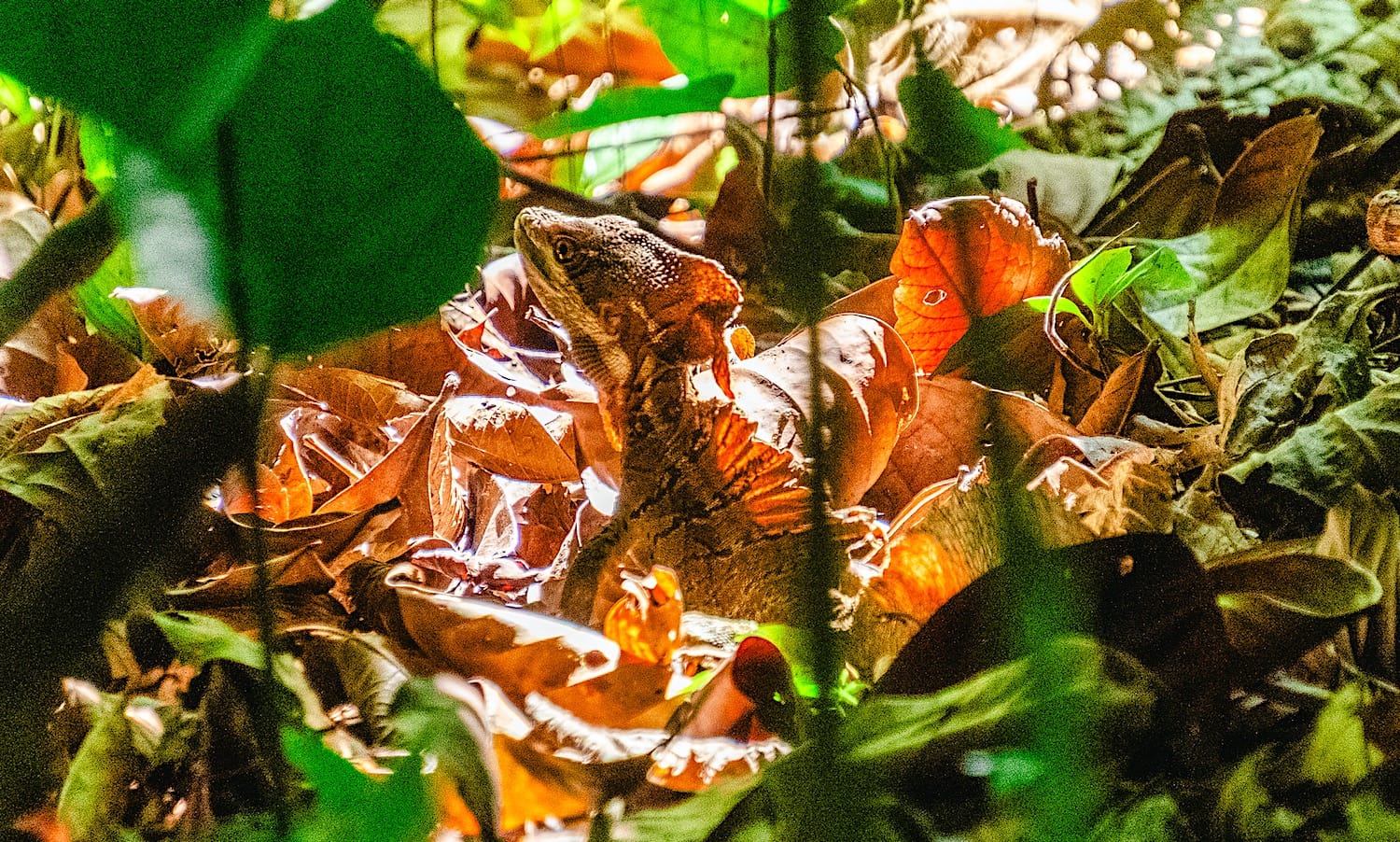
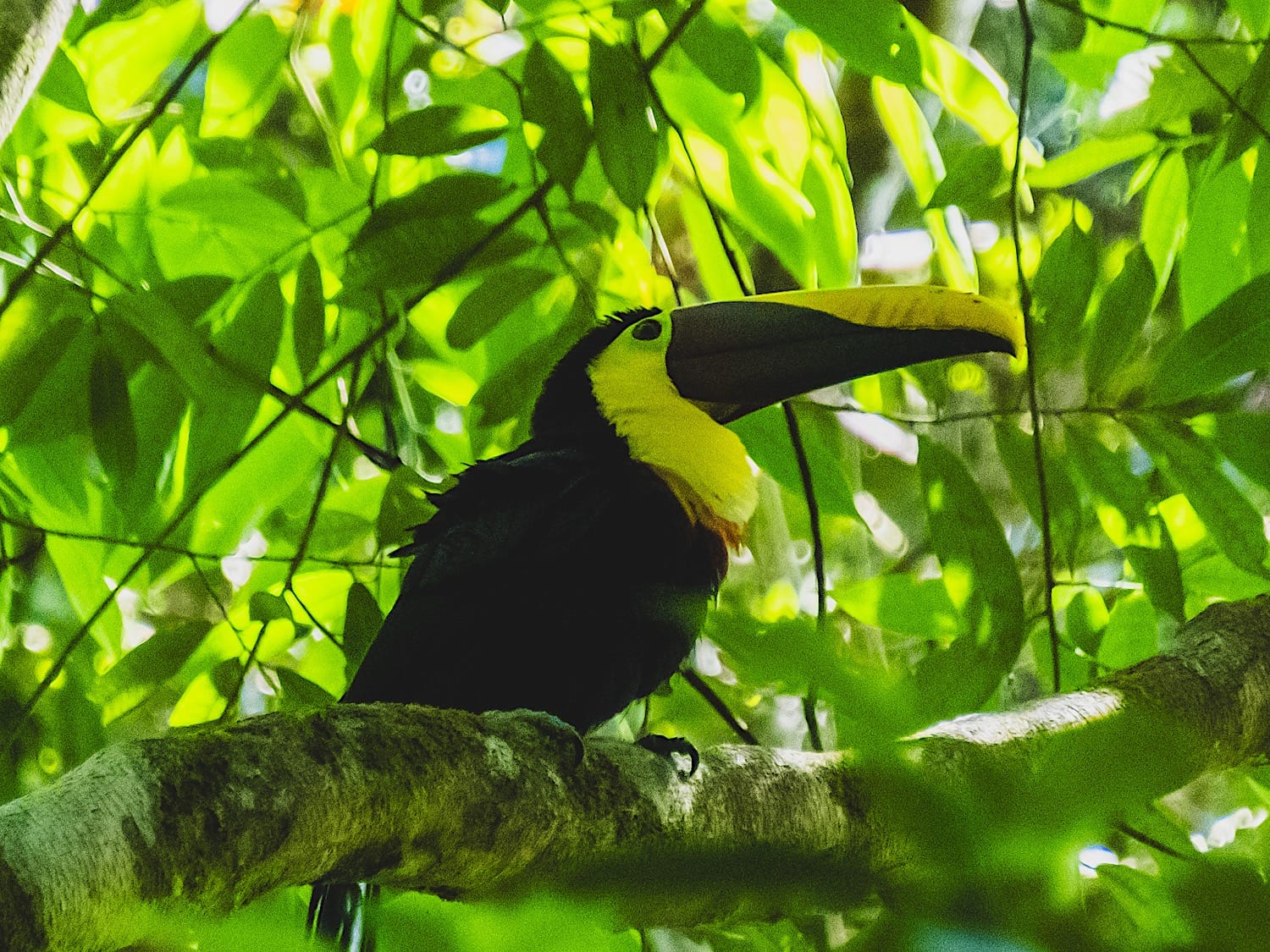
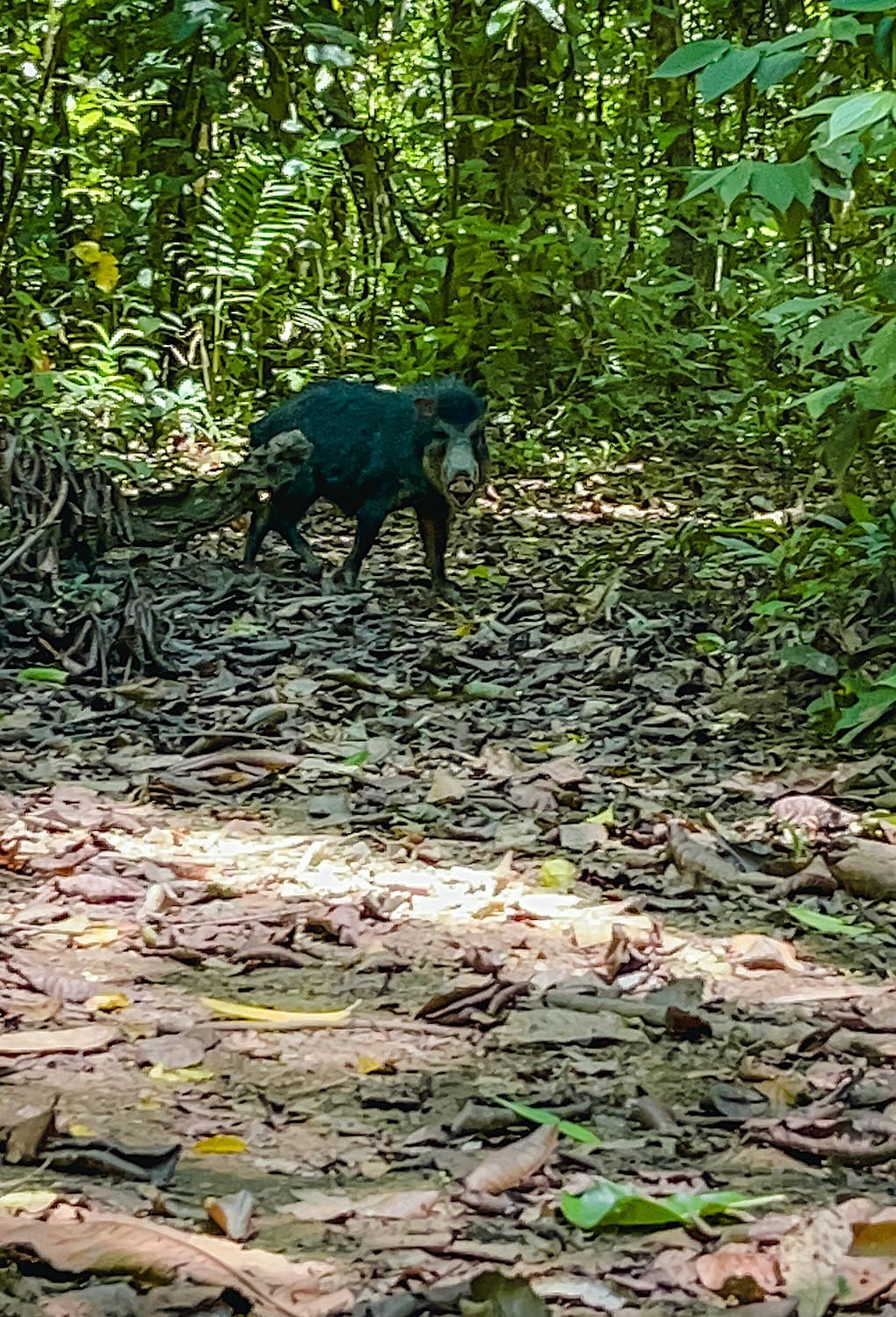
For us, Corcovado was our last stop in Costa Rica, so we had already seen many animals before getting there. Still, we saw animals we hadn't seen anywhere before, such as tapirs, peccaries, anteaters, spider monkeys, and many exotic birds we hadn't seen even in Monteverde. If you're lucky, you might even spot a jaguar!
That said, nature is unpredictable and what you get to see is pure luck. Our guide told us some people do the overnight tour and never get to see the tapirs, whereas we saw many of them. Keep this in mind and manage your expectations, so that you don't get disappointed.
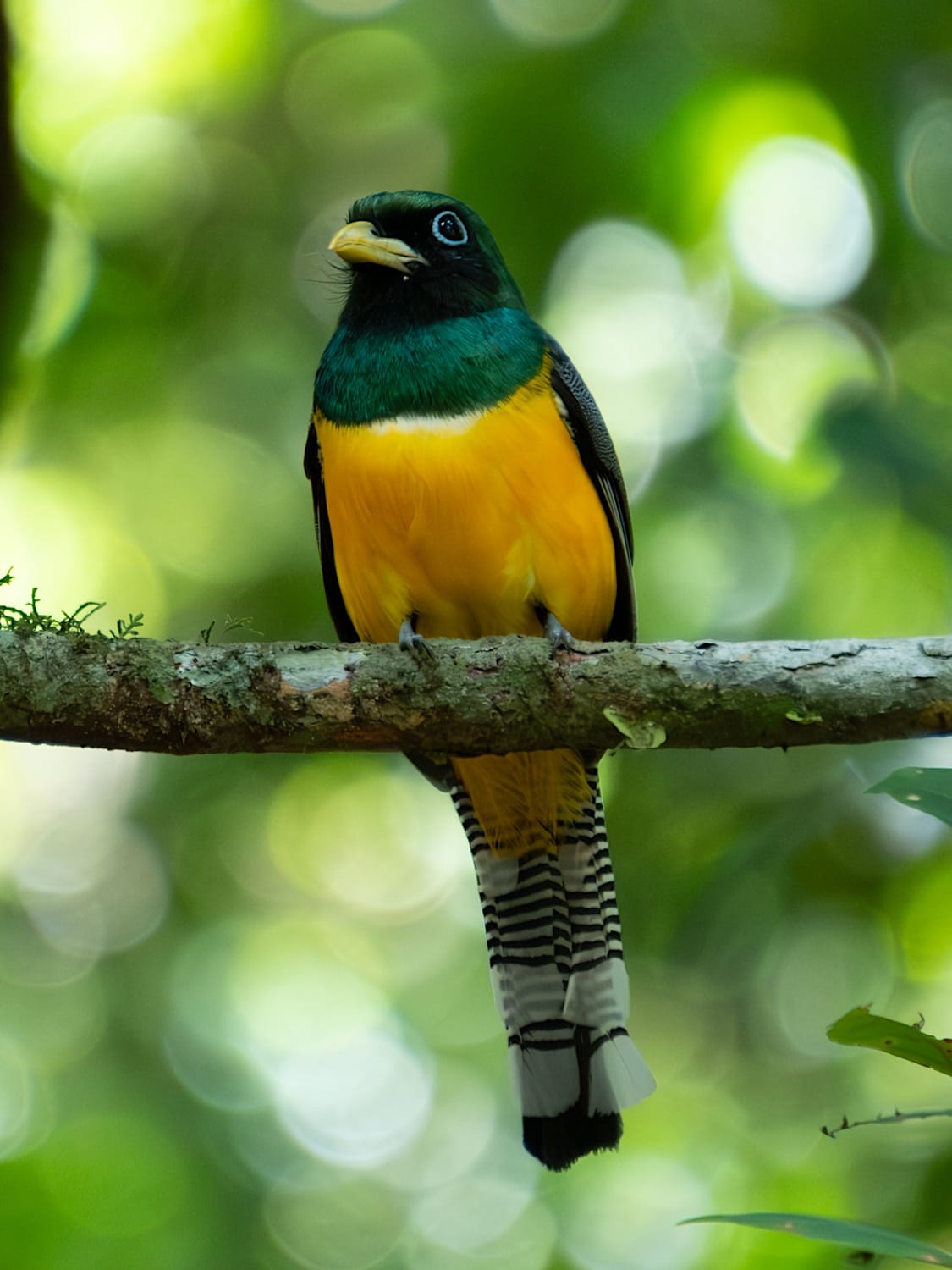
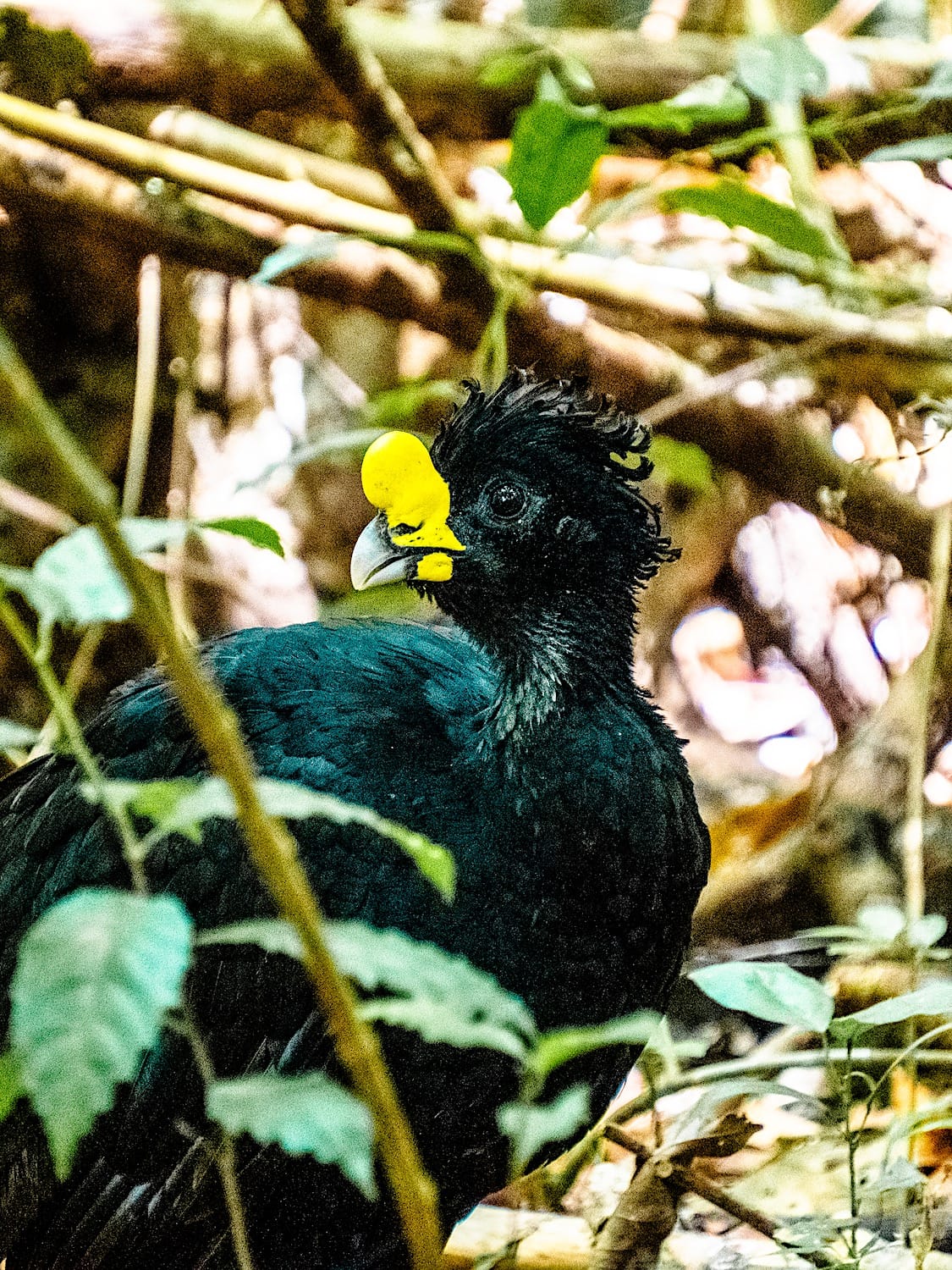
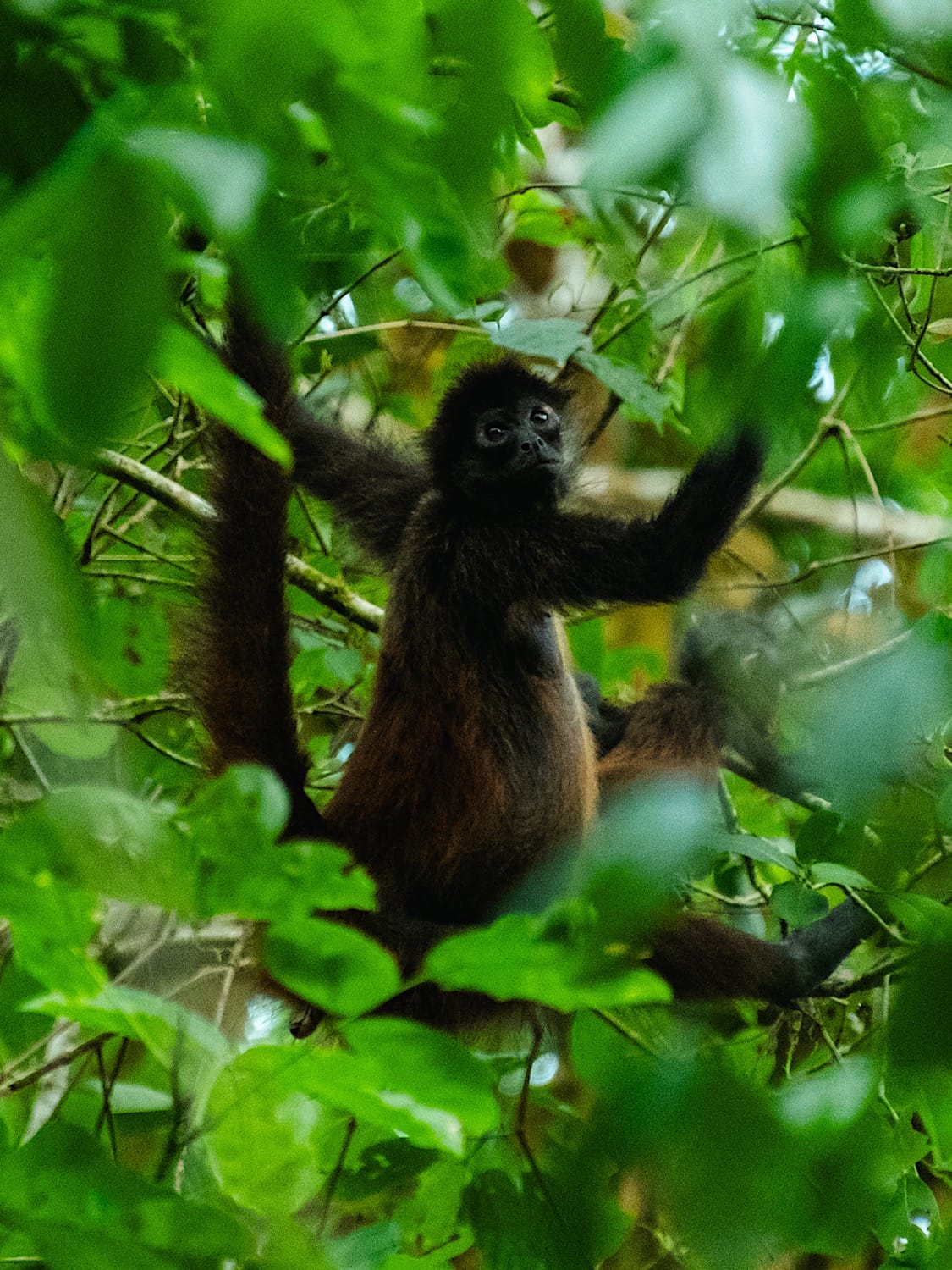
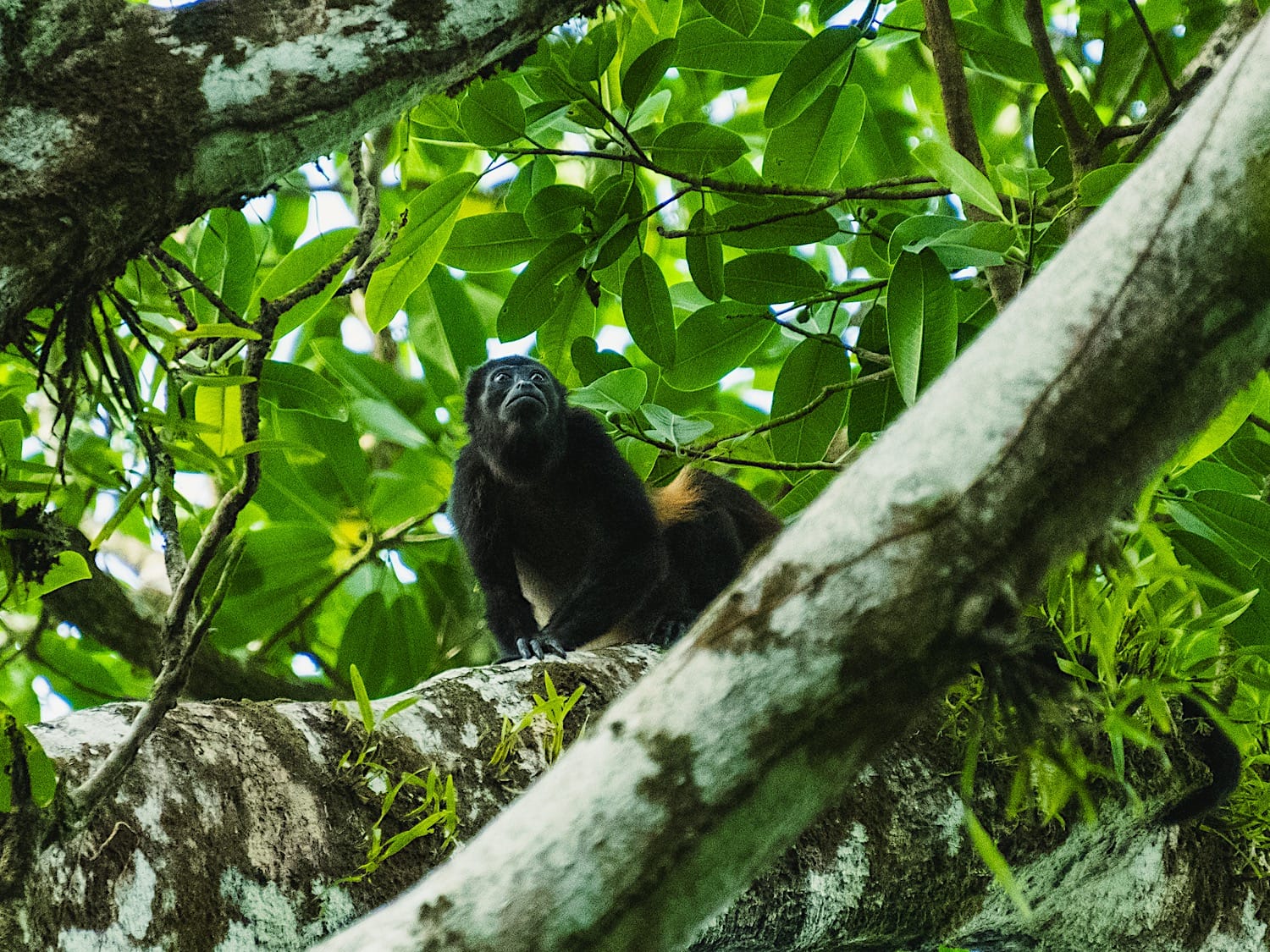
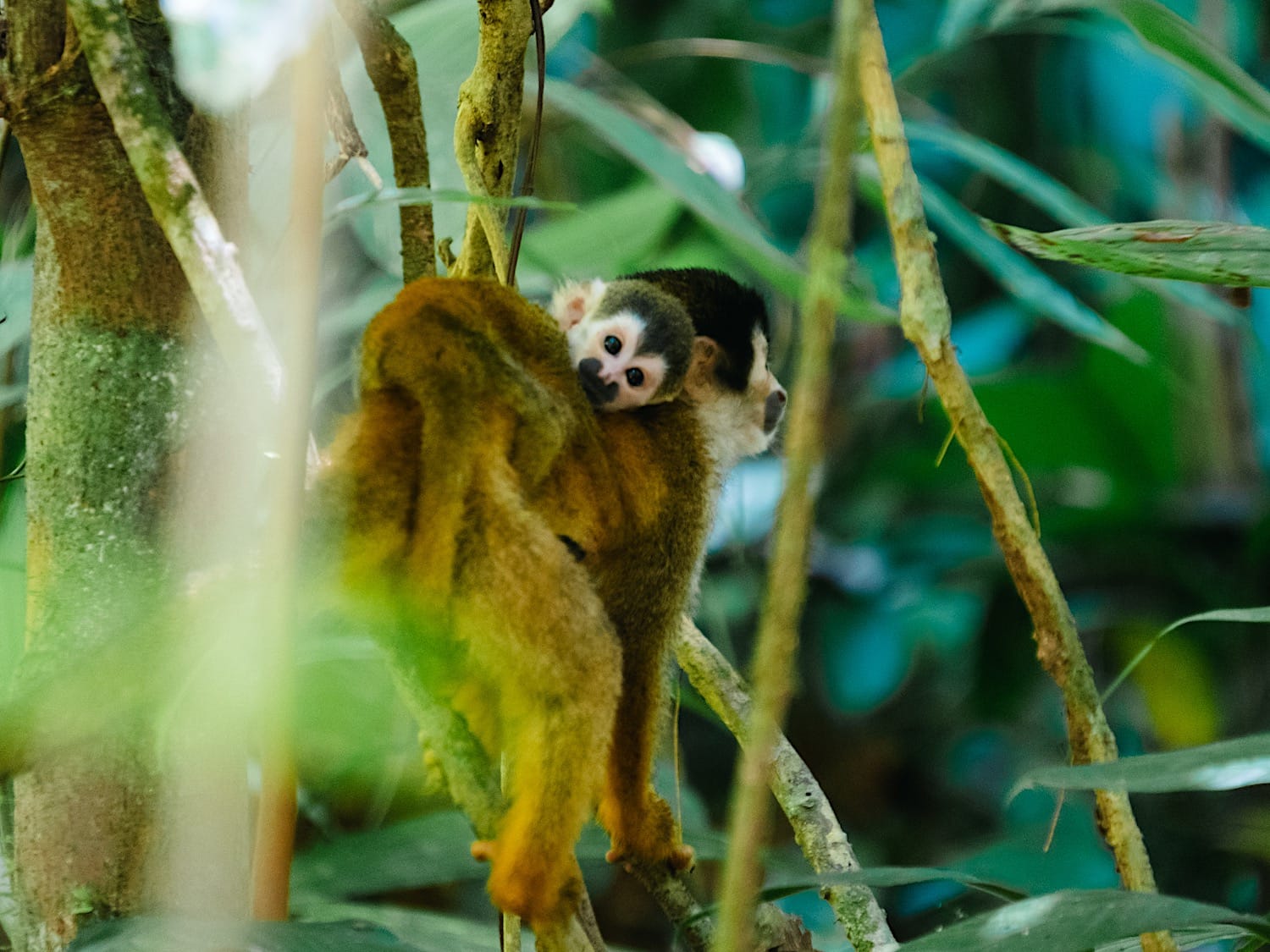
Wildlife in Corcovado National Park: a trogon, a great curassow, spider monkeys and a squirrel monkey carrying her baby.
Things to do in Corcovado besides the National Park
From Drake Bay
Snorkeling at Isla Caño
Isla Caño is a biological reserve located about 45 minutes away by boat from Drake Bay. While snorkeling, you might spot sea turtles, stingrays, and reef sharks in their natural habitat.
From January through April, you can enjoy peak visibility and crystal-clear water.
Dolphin and Whale watching
Get a chance to spot bottlenose and spinner dolphins, humpback whales, and more. Peak whale season is from late July through October.
Canyoning
Hike through the jungle (not the National Park) to the river, then walk, scramble, climb, and swim on a canyoning adventure along the river.
From Puerto Jimenez
Kayaking
Kayaking is a great activity to consider in Puerto Jimenez, and several options are available. Go kayaking in the Golfo Dulce at sunset, and if you get lucky, you may even see bioluminescence on your way back to shore. Alternatively, kayak through the mangrove canals and paddle under the canopy to explore this ecosystem.
Corcovado National Park FAQs
1. Is Corcovado National Park worth visiting?
Yes, if seeing wildlife is the priority, but it’s not an easy trip. You need a guide, bookings, and a boat or a long transfer. For me, the rawness of it and the tapirs made it worth it.
2. Which is better, Manuel Antonio or Corcovado?
It depends on what you want. Manuel Antonio is easier to reach, with short, flat trails and plenty of monkeys, sloths, and birds. Corcovado is remote and wilder, and it’s where I saw tapirs.
I personally preferred Corcovado, as Manuel Antonio felt too crowded and touristy, while Corcovado felt more authentic and raw.
3. Are there jaguars in Corcovado National Park?
Yes, but they’re rare, so don’t count on seeing one.
Camera-trap studies found only a few jaguars per 100 km² in the park. A 2025 Tico Times report describes more sightings than before, and the population appears to be recovering. Tourists have previously seen a jaguar along the Sirena River, but like pumas, jaguars are rare to spot in Corcovado.
4. Do you need a guide and a reservation to visit Corcovado?
Yes to both. Every visitor must go with a certified guide, a rule in place since February 2014. Reservations go through an agency, tour operator, or lodge, usually at least 30 days ahead.