

 Paloma

Table of contents
Nestled where Argentina, Brazil, and Paraguay converge, Iguazu Falls is a dazzling display of nature's grandeur and power. This iconic cascade system is one of the largest and most breathtaking in the world. It spans nearly 2.7 kilometers and has over 270 individual waterfalls cascading through lush rainforest.
Often counted among the planet's most awe-inspiring natural wonders, Iguazu Falls captivates millions of visitors annually with its thunderous roar and breathtaking vistas.
Dive into my comprehensive guide to learn how to get there, where to stay, and insider tips for experiencing both the Argentine and Brazilian sides of the falls.
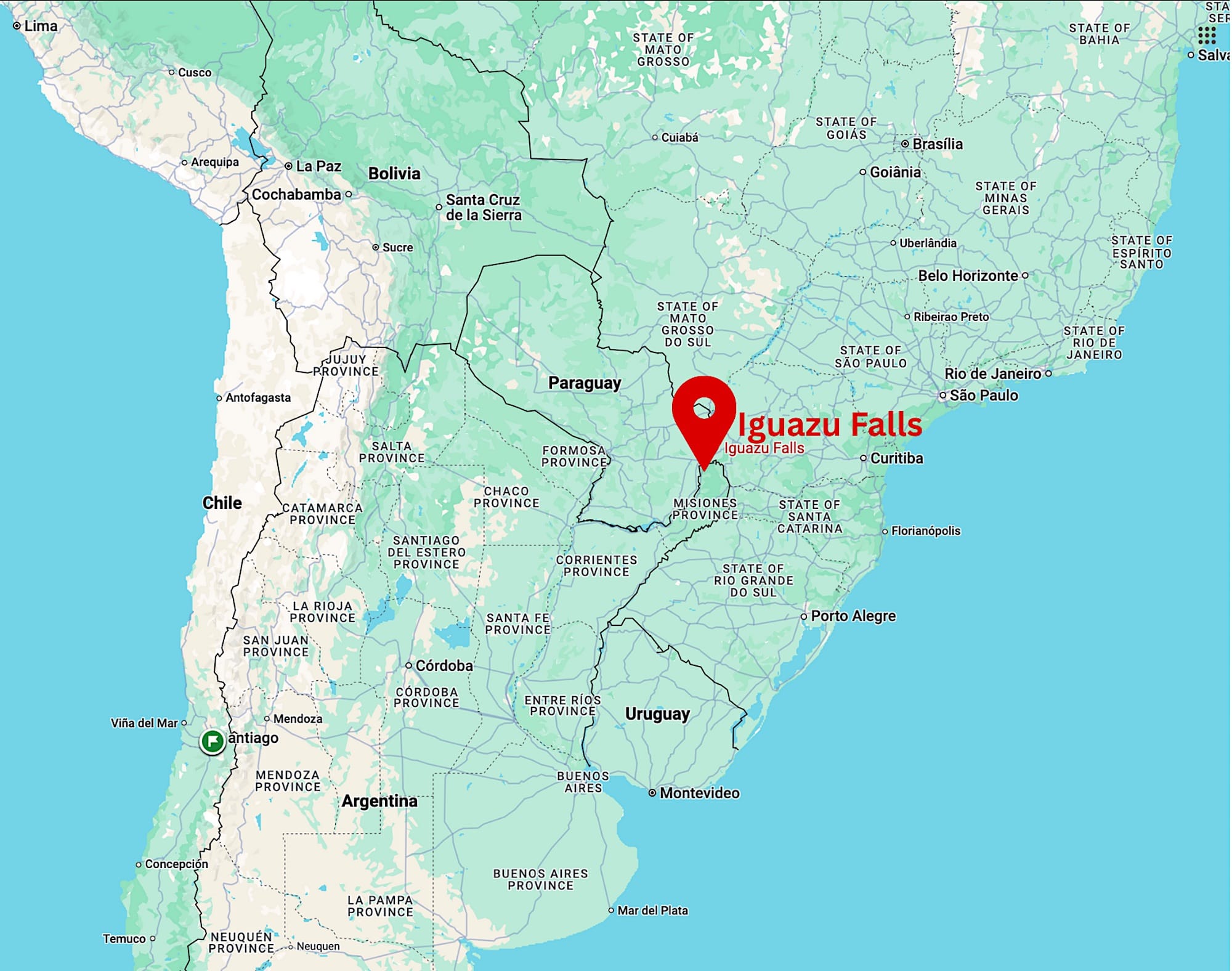
Where is Iguazu Falls? (map)
Iguazu Falls are located on the border between Argentina and Brazil.
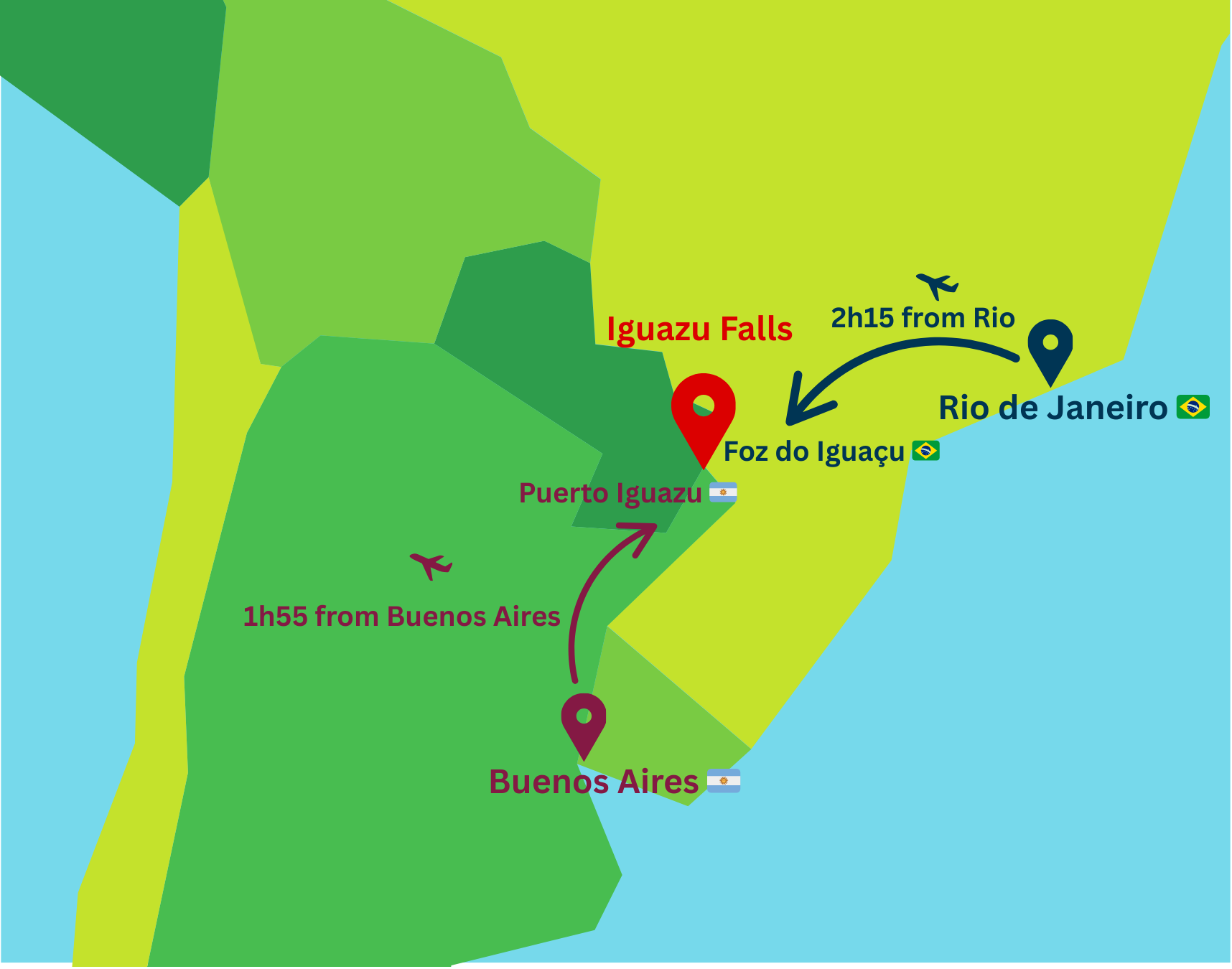
How to get to Iguazu & nearest airports
-From Argentina: the closest airport to Iguazu is Puerto Iguazu. Flights from Buenos Aires take about 1h55.
-From Brazil: the closest airport to Iguazu is Foz do Iguaçu. Flights from Rio de Janeiro take about 2h15.
Things to know before visiting Iguazu Falls
Where to stay to visit Iguazu Falls
The short answer is: it depends.
On the Argentine side, Puerto Iguazu is the closest city to the Falls. This city offers more services and is generally considered safer than its Brazilian counterpart. Tourist-friendly public transportation to both sides of the Falls is also available here.
If you prefer to stay on the Brazilian side, consider accommodations in Foz do Iguaçu.
You can take semi-private or private transportation from either city to both sides of the Falls.
How many days to stay in Iguazu
Ideally, spend at least two full days in Iguazu, one for each side.
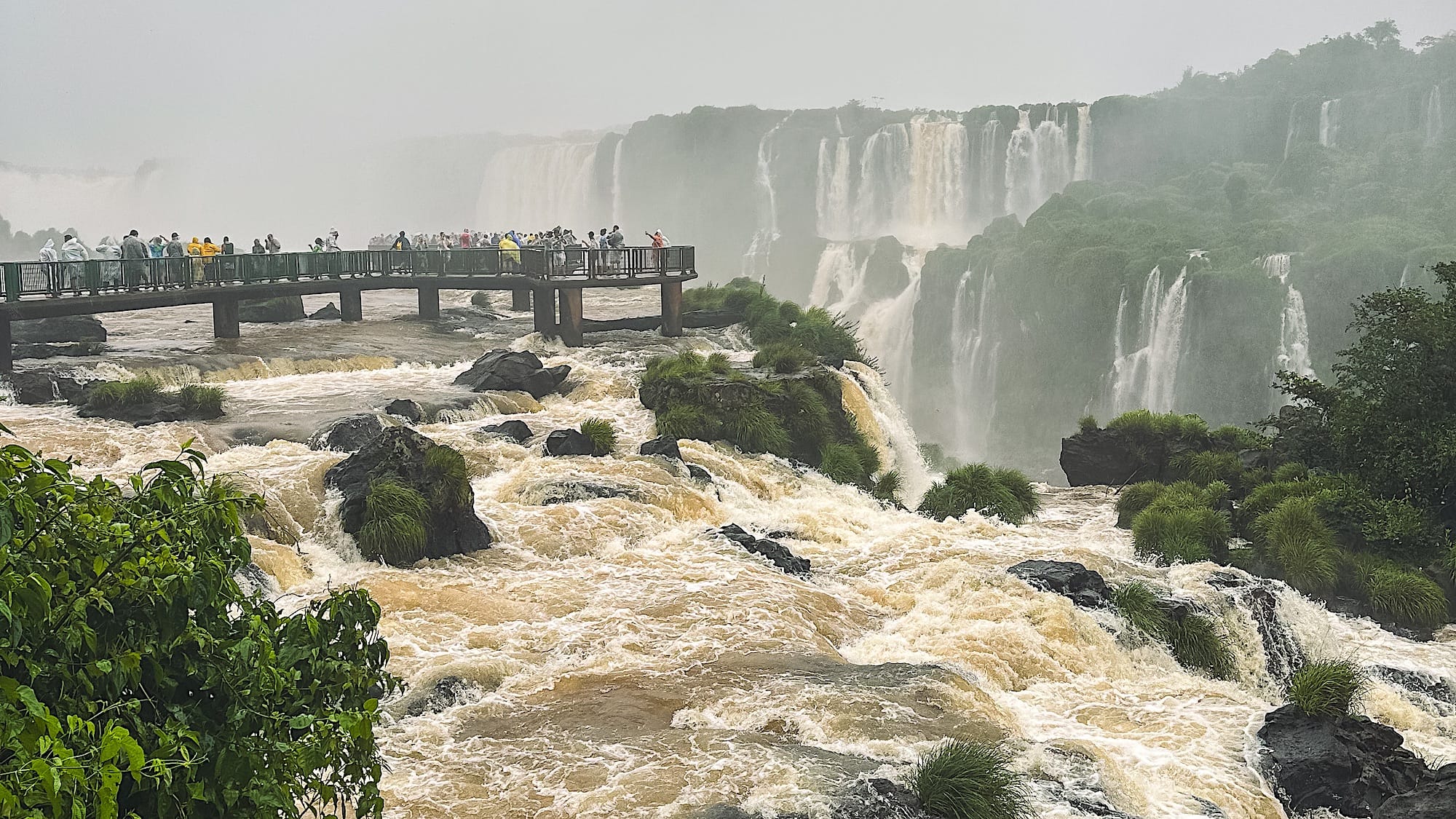
Note that this area has subtropical weather, meaning there will be rainy days throughout the year. If you really want to enjoy sunny weather, stay longer to increase your chances of clear skies.
Entrance fees to Iguazu
In 2026, the entrance fee for foreigners on the Brazilian side will be R$131 (approximately 26 USD) per day. You can buy tickets here.
On the Argentine side, the Falls are situated inside Iguazu National Park, so foreigners must pay an entrance fee of ARS 60,000 (approximately 40 USD) per day. Tickets can be bought here.
Both countries offer multi-day passes that reduce the daily fee if you plan to visit for more than a day.
Prices checked in October 2026. Entrance fees and exchange rates change often, so confirm on the official park websites before you go.
Which side is better to visit Iguazu
I highly recommend visiting both sides, as they offer different perspectives.
The Brazilian side gives you a vue d'ensemble of the falls, while the Argentine side immerses you in the waterfalls.
What to bring or wear
- A waterproof jacket and clothes, or a poncho. Basic plastic ponchos are sold at the entrance.
- A waterproof bag if you're planning to ride the boat
- Sunscreen if you're going on a sunny day
- Cash to pay for the lockers

Best time to visit Iguazu Falls
Iguazu Falls is open year-round, and it rains every month, so there is no truly dry season. Here is how the seasons compare.
Hot and wet: December to March
The most water and the most dramatic views, but also the hottest and most humid weather, with highs in the 30s °C. This is peak holiday time, so expect the biggest crowds. Heavy rain can close the Devil's Throat walkway.
Shoulder season: April to May and September to October
The best balance. It's warm but not extreme, there are fewer crowds, and the falls are still running strongly.
Cooler and drier: June to August
The most comfortable weather and the driest stretch, with the lowest water flow. The falls still run, including the Devil's Throat.
My pick is the shoulder season, April to May or September to October. We visited in January, and the Devil's Throat was closed due to heavy rain.
Whenever you go, arrive early. The Devil's Throat is the busiest spot, so I'd head there first thing in the morning.
Brazil side

Entrance
Respect the time indicated on your ticket, as you might be refused entry on busy days.
After showing your ticket, you will queue to take a bus. The bus is included in the ticket fee and stops at several points of interest in both directions, where you can get off.
Waterfalls visit
To visit the waterfalls, get off the bus at the "Path of the Falls" stop.
From there, you follow the path to the Garganta do Diablo, which ends next to a big waterfall.
When you're done, head to Porto Canoas Square, where you will find restaurants and toilets. The bus back to the entrance also leaves from there.

Boat Ride at Iguazu Falls (Brazil side)
At first, I wasn't convinced about the boat ride because of its relatively elevated price tag (70 USD per person for 30 min.). However, I don't regret doing it since it gives you an extra perspective of the Falls and is quite fun.
We decided to take the boat ride on the Brazilian side since it has only one path to discover the falls, whereas the Argentine side has several. Time-wise, this was a better decision.
You can buy boat tickets at the entrance building before showing your regular entrance tickets.
To board the boat, get off the bus at the "Macuco Safari Station" and show your tickets at the building there. Then, a guide will take you on a short bus ride and a hike to the departure pier.
Please note that the boat will pass under a waterfall, so ensure your electronics are safe in a waterproof bag. If you prefer, you can store your backpack and personal items in lockers in the area before boarding the boat.

Argentina side
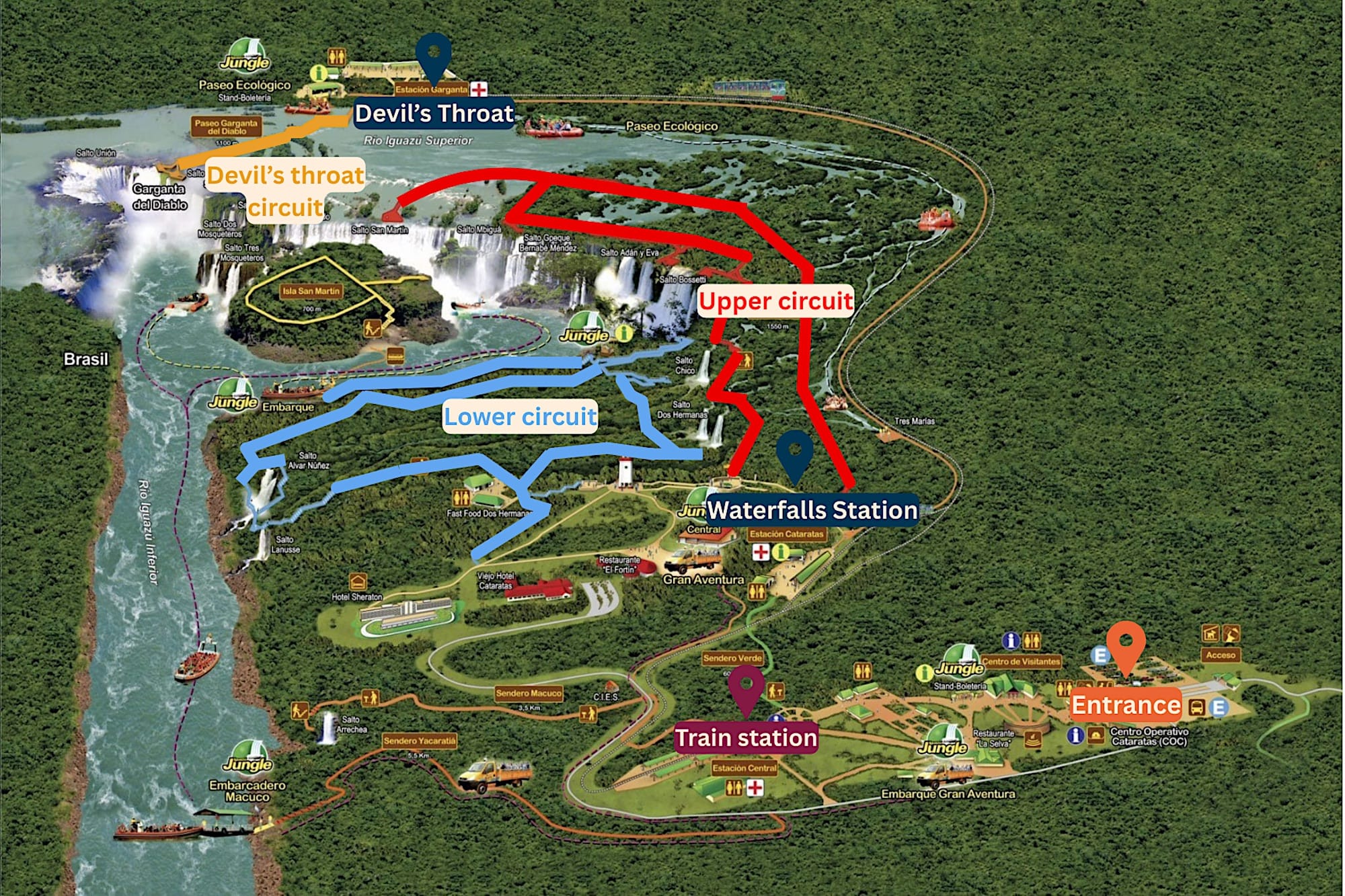
Entrance to the train station
After showing your tickets at the entrance, you will walk straight for about 10 minutes to the train station.
Train station to Waterfalls station
From here, you have two options: continue walking or take the train (the latter is included in the entrance fee).
If you choose to take the train, you must get a free ticket at the station. This ensures a first-come, first-served system. The train departs every 30 minutes.
Get off at the first stop for the Upper and Lower Circuits, or the second stop for the Devil's Throat Circuit.
If you prefer to walk, follow the "Green Trail" for 650 meters to reach the Waterfalls station.
Upper and Lower Circuit
The upper circuit is 1,750 meters long and takes about 1 hour to complete.
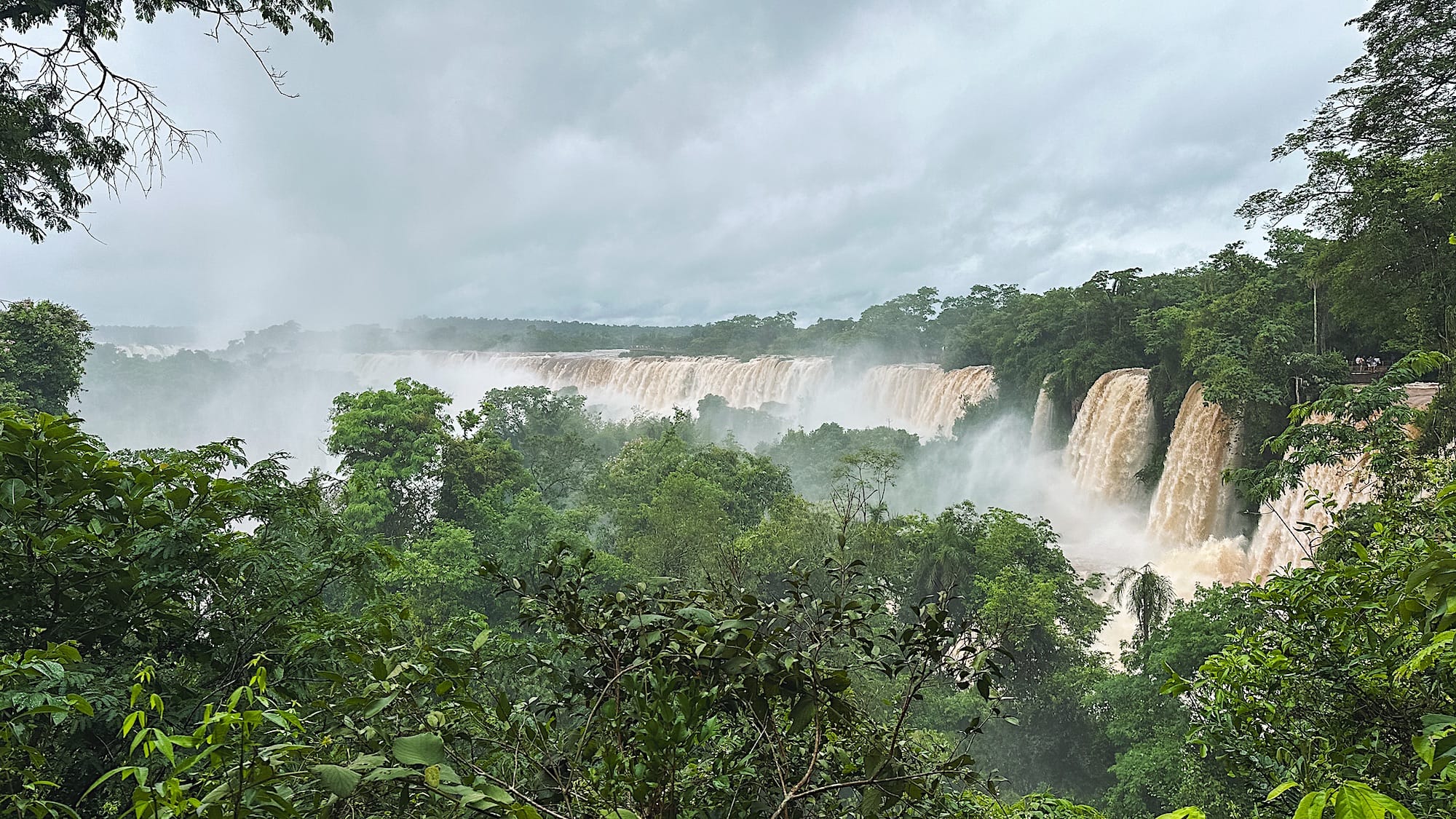
The lower circuit is 1700 meters long and also takes about 1.5 hours to complete
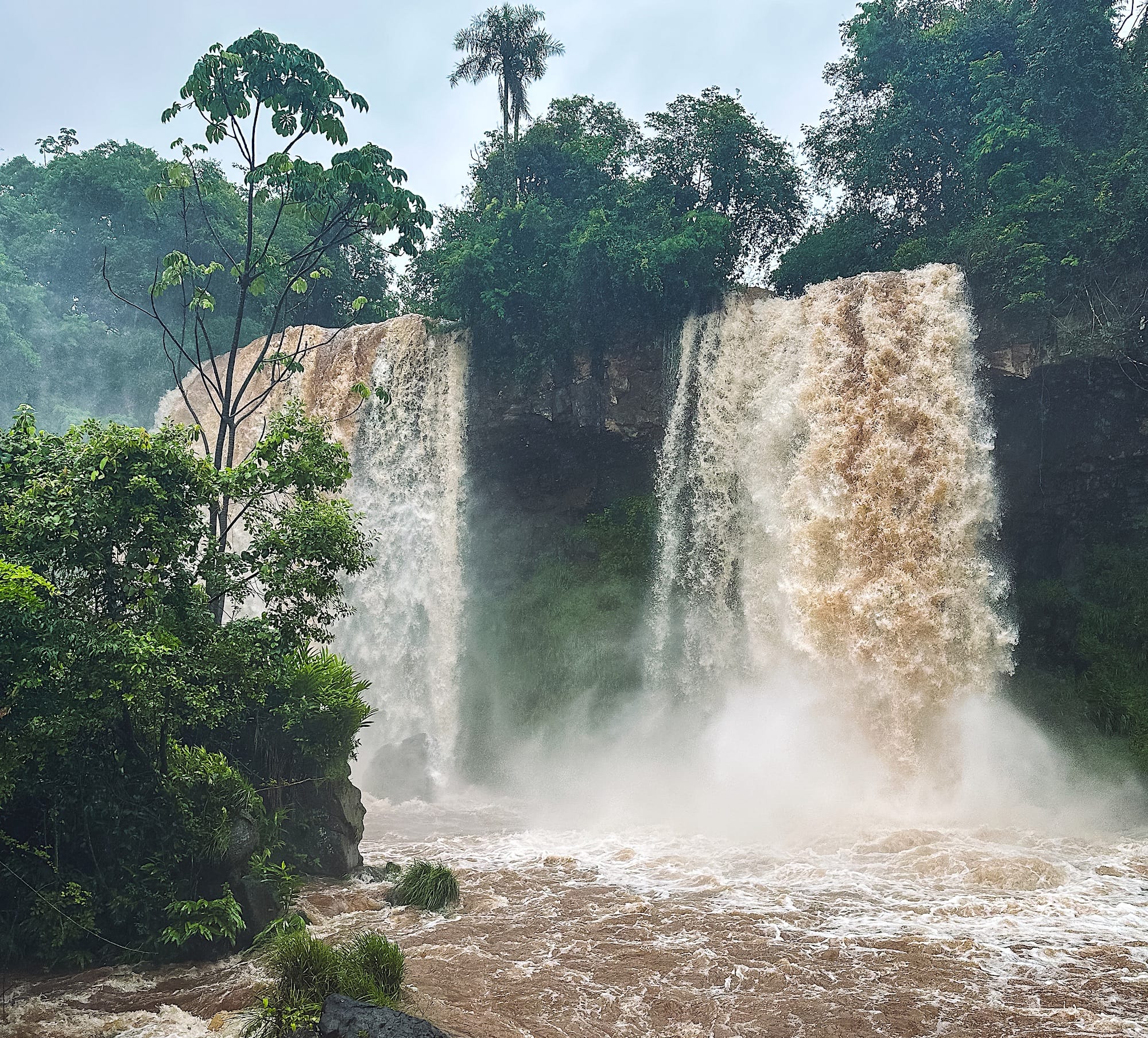
Waterfalls Station to Devil's Throat Station
After exploring the upper and lower circuits, return to the Waterfalls Train Station and head to Devil's Throat Station.
The Devil's Throat circuit is a 2200-meter round trip and takes about 2 hours to complete. This is the closest you can get to the Falls' massive water flow.
Be aware that this part of the park closes when heavy rainfall causes the river to carry too much water.
Iguazu Falls FAQs
1. Where is Iguazu Falls?
Iguazu Falls sits on the border between Argentina and Brazil, about 18 km from Puerto Iguazú and Foz do Iguaçu, near where Argentina, Brazil and Paraguay meet.
2. Which side of Iguazu Falls is better, Argentina or Brazil?
I highly recommend visiting both sides, as they offer different perspectives. The Brazilian side gives you a view of the falls as a whole, while the Argentine side immerses you in the waterfalls.
3. How many days do you need at Iguazu Falls?
Ideally, at least two full days, one for each side. The area has subtropical weather, so it can rain year-round. For a better chance of clear skies, stay longer.
4. How much does it cost to visit Iguazu Falls?
In 2026, foreigners pay R$131 (about 26 USD) per day on the Brazilian side and ARS 60,000 (about 40 USD) per day on the Argentine side, inside Iguazu National Park. Both countries have multi-day passes that reduce the daily fee.
5. What is the nearest airport to Iguazu Falls?
For the Argentine side, the closest airport is Puerto Iguazú, with flights from Buenos Aires of about 1h55. On the Brazilian side, the closest airport is Foz do Iguaçu, with flights from Rio de Janeiro taking about 2h15.
6. Where should I stay to visit Iguazu Falls?
It depends. Puerto Iguazú in Argentina has more services, is generally considered safer, and has tourist-friendly public transport to both sides. If you prefer Brazil, look at accommodation in Foz do Iguaçu. Both cities offer semi-private and private transport to both sides.
7. What is the Devil's Throat?
It's the closest you can get to the falls' massive water flow. On the Argentine side, the Devil's Throat circuit is a 2,200 m round trip and takes about 2 hours. On the Brazilian side, the path ends at a large waterfall. The Argentine section closes when heavy rainfall makes the river carry too much water.
8. How do you get around the Argentine side?
Take the train from the entrance station, included with your ticket. Pick up a free ticket at the station (first come, first served). It departs every 30 minutes. Get off at the first stop for the upper and lower circuits, or the second for the Devil's Throat. You can also walk the 650-meter Green Trail.
9. How long do the Iguazu Falls circuits take?
The upper circuit is 1,750 m and takes about 1 hour. The lower circuit is 1,700 m and takes about 1.5 hours. The Devil's Throat is 2,200 m round trip and takes about 2 hours.
10. Is the Iguazu Falls boat ride worth it?
I wasn't convinced at first because of the price (70 USD per person for 30 minutes), but I don't regret it. It gives you an extra perspective, and it's fun. We did it on the Brazilian side because it has only one path, whereas the Argentine side has several. The boat passes under a waterfall, so bring a waterproof bag for your electronics, or use the lockers before boarding.
11. Is Iguazu Falls worth visiting?
Yes. I highly recommend visiting both sides, since each gives a very different perspective on the falls.
12. When is the best time to visit Iguazu Falls?
The shoulder seasons, April to May and September to October, offer the best balance of strong water flow, milder weather, and smaller crowds. December to March is hot, wet, and busy, and heavy rain can close the Devil's Throat walkway. June to August is the driest and most comfortable, though the water flow is lower.